
Capability evidenceIllustrative trace
01 · PathwayA practical capability goal and route are visible
Build practical AI capability through guided Programs, live teaching in Chatoner Class, eligible Program-linked Labs, real projects, human review, and proof-backed credentials.
Chatoner AI Academy helps individuals, teams, schools, universities, NGOs, and institutions build practical AI skills. Guided Programs, live teaching in Chatoner Class, eligible Program-linked Chatoner AI Labs, real projects, human review, and proof-backed credentials help learners turn responsible learning into capability they can apply and improve.
Eight connected stages turn applied learning into demonstrated, human-reviewed capability and a practical outcome.
Illustrative learning sequenceCapability evidenceIllustrative trace
Human review
Mentor feedback, credential decisions, and impact review keep a named human owner.
One connected learning model. Chatoner Class and Chatoner AI Labs sit under AI Academy. Class delivers the live learning experience, while Labs provides practical environments through direct access or eligible Program entitlements without a second charge for included Labs.
Chatoner AI Academy connects guided Programs, live teaching in Chatoner Class, Chatoner AI Labs, real projects, human feedback, and proof-backed credentials so learning can become practical capability.
Use a native, multilingual, accessible classroom for teaching, tutoring, participation, and assessment. Verified third-party interoperability depends on the approved deployment.
Explore Chatoner ClassEligible learners use only the Labs attached to their active Program, within its rules and limits, without paying a second time for those included Labs.
Understand Labs accessEach Program connects learning outcomes to live teaching where included, eligible Chatoner AI Labs, projects, verification, responsible-use expectations, and a practical next step.

Use AI safely for learning, productivity, personal administration, freelancing, and everyday decisions. This pathway builds practical habits for planning, research, writing, analysis, personal systems, and responsible judgment.
Ask about this program
Build reliable instructions, context packs, retrieval patterns, tests, and reusable prompt systems. Learners practice source grounding, output evaluation, prompt libraries, and evidence habits that make AI work repeatable instead of accidental.
Ask about this program
Turn responsible AI from policy language into daily operating practice. Learners work through privacy boundaries, human review, risk categories, approval gates, evidence logs, and safe-use decisions for real teams and institutions.
Ask about this program
Design AI-native products, interfaces, workflows, user journeys, prototypes, and responsible interactions. The studio focuses on user intent, human handoff, interface states, model limits, and product evidence before a build is scaled.
Ask about this program
Organize documents, datasets, knowledge bases, retrieval patterns, and source-grounded assistant workflows. Learners practice ingestion, structure, quality checks, citations, and evidence review so AI answers can be trusted.
Ask about this program
Design triggers, conditions, AI actions, human approvals, errors, monitoring, and documentation. Learners model real operational workflows and learn how to keep automation useful, recoverable, auditable, and owned by people.
Ask about this program
Build front-end, back-end, database, AI features, integrations, testing, and live deployment. The lab connects product thinking with engineering discipline so learners leave with a working artifact, deployment path, and proof-of-work record.
Ask about this program
Deliver private cohorts, role tracks, workflow pilots, governance, teacher enablement, and adoption reporting. Programs can help sales and service teams interpret evidence, improve playbooks, review AI recommendations, and align learning with organization priorities.
Ask about this programChatoner does not stop at content consumption. Learners learn live where included, practice, build, test, verify, deploy, reflect, and produce evidence that can support a credible capability claim.
Guided Programs, live teaching in Chatoner Class, prompt and context practice, verification, governance, and responsible use.
Eligible Chatoner AI Labs, working products, workflows, assistants, dashboards, automations, and deployed artifacts.
Projects, capstones, human feedback, reviewer notes, evidence, portfolios, and verifiable credentials.
Live teaching belongs in Chatoner Class. Chatoner Meet remains available for appropriate institutional conversations such as admissions, advising, guardian meetings, office hours, and partnerships under AI Conversations.
Practice project review
✓ Experience checked
✓ Data handling reviewed
→ Mentor feedback next
Status: illustrative project
Professional, builder, designer, student, and everyday AI pathways with portfolio, project, and credential outcomes.
Private cohorts, role-based tracks, workflow projects, readiness, governance, adoption analytics, and executive reporting.

Student AI literacy, teacher enablement, academic integrity, AI safety, safeguarding, curriculum licensing, and institutional reporting.

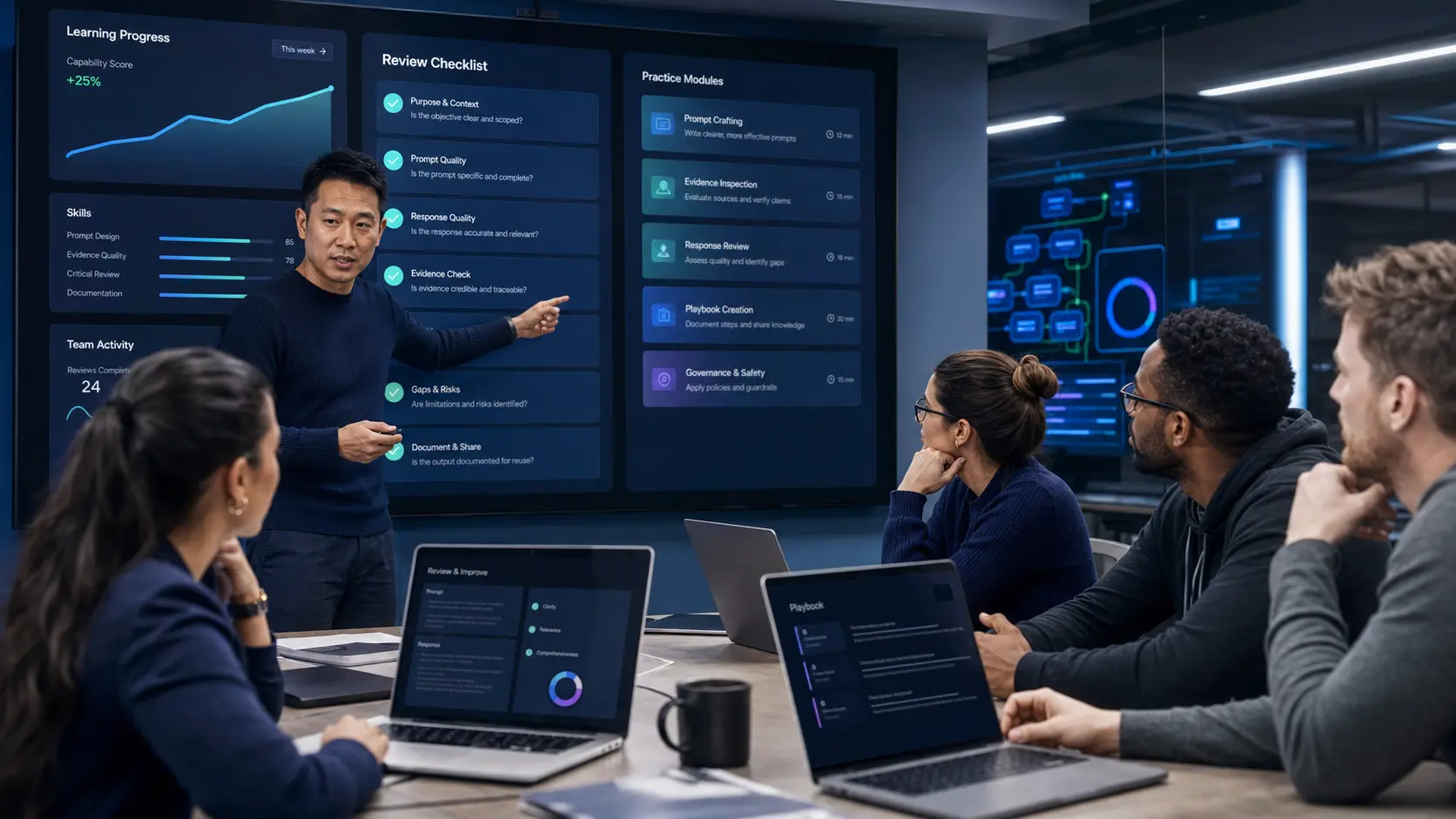
Learners work together on real projects while educators make verification, safety, and evidence visible.
Credential claims connect to defined criteria, human review, responsible-use requirements, evidence, verification status, and a public or permissioned record.
Can plan, build, test and deploy an AI-assisted web app, then explain the key choices.
The credential keeps the reviewer, approved skills, linked evidence and status together.


